

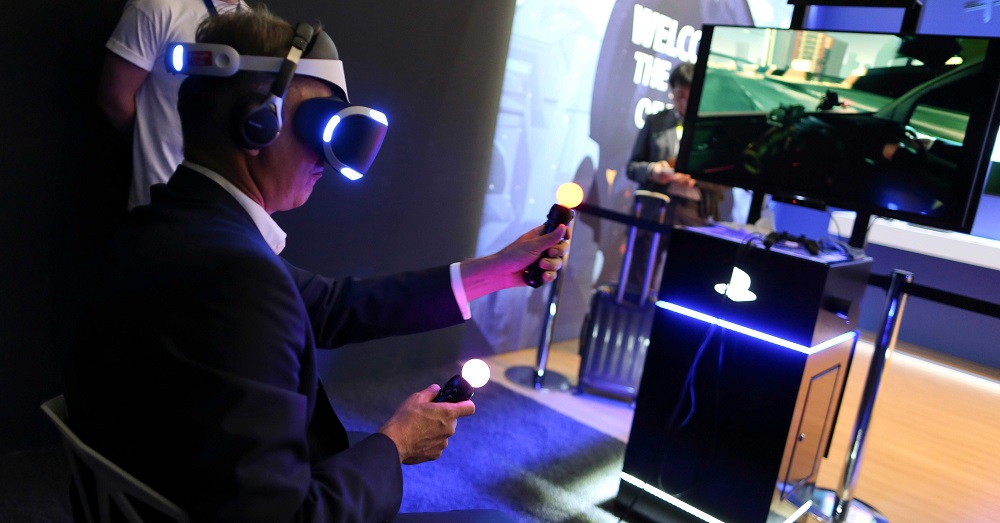
Virtual reality is no longer confined to entertainment and gaming. Today, VR technology is redefining how people learn, work, heal, and collaborate across industries. With immersive environments and realistic simulations, virtual reality enables experiences that were once impossible or too costly in the physical world.
As hardware becomes more accessible and software more sophisticated, VR is emerging as a powerful tool for innovation beyond games.
Understanding Virtual Reality Technology
Virtual reality creates a computer-generated, immersive environment that users can interact with using headsets, motion controllers, and sensors. Unlike traditional screens, VR places users inside the experience, enhancing engagement and realism.
Core components of VR systems include:
-
Head-mounted displays
-
Motion tracking sensors
-
Interactive controllers
-
Immersive software environments
These elements work together to deliver lifelike simulations across diverse use cases.
Healthcare and Medical Training
Surgical Simulation and Training
VR allows medical professionals to practice complex procedures in a risk-free virtual environment. Surgeons can refine techniques, reduce errors, and improve confidence before entering the operating room.
Therapy and Rehabilitation
Virtual reality is widely used in mental health treatment and physical rehabilitation by:
-
Treating phobias and anxiety disorders
-
Supporting pain management
-
Assisting motor skill recovery after injuries
The immersive nature of VR improves patient engagement and outcomes.
Education and Skill Development
Immersive Learning Experiences
VR transforms traditional education by placing learners inside interactive environments. Students can explore historical events, scientific concepts, and complex systems through experiential learning.
Corporate Training and Upskilling
Organizations use VR to train employees in:
-
Safety procedures
-
Technical operations
-
Customer service simulations
This reduces training costs while improving knowledge retention.
Real Estate and Architecture
Virtual reality enables virtual property tours, allowing buyers to explore spaces remotely. Architects and designers also use VR to visualize projects before construction begins.
Key advantages include:
-
Faster decision-making
-
Reduced travel costs
-
Improved design accuracy
-
Enhanced client collaboration
Manufacturing and Industrial Applications
VR supports industrial operations by simulating real-world environments.
Applications include:
-
Equipment maintenance training
-
Factory layout optimization
-
Hazard identification and safety drills
By practicing scenarios virtually, workers reduce risks and increase operational efficiency.
Retail and E-Commerce Experiences
Retailers are using VR to offer immersive shopping experiences. Customers can explore virtual stores, try products digitally, and make more informed purchasing decisions.
This approach bridges the gap between physical and online retail environments.
Remote Collaboration and Virtual Workspaces
Virtual reality enables teams to collaborate in shared digital spaces regardless of location. Virtual meeting rooms, design studios, and training environments improve communication and creativity.
VR-based collaboration supports:
-
Global teamwork
-
Faster ideation cycles
-
Reduced travel-related expenses
Challenges Limiting VR Adoption
Despite its growing use, VR faces several barriers.
-
High initial hardware costs
-
Motion sickness concerns
-
Limited content availability in some sectors
-
Technical complexity for new users
Ongoing improvements in hardware comfort and software usability are gradually addressing these challenges.
The Future of Virtual Reality Applications
Virtual reality is expected to become more integrated into everyday workflows. Future trends include:
-
Lighter and more affordable VR headsets
-
AI-powered virtual environments
-
Greater adoption in healthcare, education, and enterprise
-
Blending VR with augmented and mixed reality technologies
As these innovations mature, VR will continue expanding far beyond gaming.
FAQs
What industries benefit most from virtual reality?
Healthcare, education, manufacturing, real estate, retail, and corporate training see significant benefits.
Is virtual reality suitable for small businesses?
Yes. Scalable VR solutions and cloud-based platforms make adoption increasingly affordable.
How does VR improve learning outcomes?
Immersive experiences increase engagement, retention, and practical understanding.
Can virtual reality replace physical training?
It complements physical training by reducing risk and cost, but does not fully replace hands-on experience.
What equipment is required for VR applications?
Typically, a VR headset, compatible software, and motion controllers are needed.
Are there health risks associated with VR use?
Extended use may cause eye strain or motion discomfort, but these effects are generally temporary.
Will virtual reality become mainstream outside gaming?
Yes. As technology evolves, VR is becoming a standard tool across multiple professional and commercial sectors.
Comments are closed.